Last Updated: October 25, 2026
Quick Summary
Simple vegan protein sources for beginners are lentils, canned beans, tofu, tempeh, and seeds, all cheap and available in any supermarket. Most healthy adults need roughly 0.8 grams of protein per kilogram of body weight daily, and putting one protein anchor at each meal usually lands you in the 50-80g range without tracking.
- Canned beans and lentils give the most protein for the least money and effort.
- A 70 kg adult needs roughly 56-84 grams of protein a day.
- You don’t need to combine proteins at every meal; variety across the day is enough.
- Skip specialty protein powders at first and buy whole foods like chickpeas and red lentils.
- For soy-free swaps, use lentils, chickpeas, or hemp instead of tofu.
Table of Contents
- Why Vegan Protein Sources Feel Hard (and Why They Aren’t)
- The Easiest High Protein Vegan Foods to Start With
- How to Get Enough Protein on a Vegan Diet: A Simple Daily Target
- Easy Vegan Protein Meals for Busy Beginners
- Simple Vegan Protein Meal Ideas for a Full Day
- No-Cook and Low-Prep Vegan Protein Sources
- Allergies, Intolerances, and Swaps for Common Vegan Proteins
- Start Your Vegan Protein Plan with Vegan Lifestyle
- Frequently Asked Questions
Why Vegan Protein Sources Feel Hard (and Why They Aren’t)
Most beginners worry they’ll fall short on protein within weeks of going plant-based. That fear is louder than the reality. At Vegan Lifestyle, we hear it constantly, and the answer is almost always the same: simple vegan protein sources for beginners are hiding in plain sight, in lentils, beans, tofu, and seeds you probably already eat.
The confusion comes from a myth. Protein isn’t a meat-only nutrient, and plant foods deliver it in every meal you already cook. What trips people up is planning, not biology. Below, we’ll show you exactly which foods to buy, how much you actually need, and how to build a day of meals without counting every gram.
The Easiest High Protein Vegan Foods to Start With
Start with legumes, soy foods, and seeds. These three groups carry most of the load for new vegans, and they’re cheap, versatile, and available in any supermarket.
| Food | Protein per typical serving | Prep effort | Rough cost | Best for |
|---|---|---|---|---|
| Lentils (cooked) | ~18g per 1 cup | Low | Very low | Soups, curries, salads |
| Chickpeas (canned, drained) | ~12g per 1 cup | Very low | Low | Roasting, hummus, bowls |
| Black beans (canned, drained) | ~15g per 1 cup | Very low | Low | Tacos, burritos, salads |
| Firm tofu | ~18g per 1/2 block (about 170g) | Low | Low | Stir-fries, scrambles |
| Tempeh | ~20g per 100g | Low | Moderate | Sandwiches, grills |
| Edamame (shelled) | ~18g per 1 cup | Very low | Moderate | Snacks, bowls |
| Hemp seeds | ~10g per 3 tbsp | None | Moderate | Topping anything |
| Chia seeds | ~5g per 2 tbsp | None | Moderate | Overnight oats, puddings |
| Quinoa (cooked) | ~8g per 1 cup | Low | Moderate | Base for bowls |
| Peanut butter | ~8g per 2 tbsp | None | Low | Toast, smoothies, sauces |
| Soy milk (unsweetened) | ~7g per 1 cup | None | Low | Cereal, coffee, smoothies |
| Seitan | ~20g per 100g | Low (store-bought) | Moderate | Stir-fries, sandwiches |
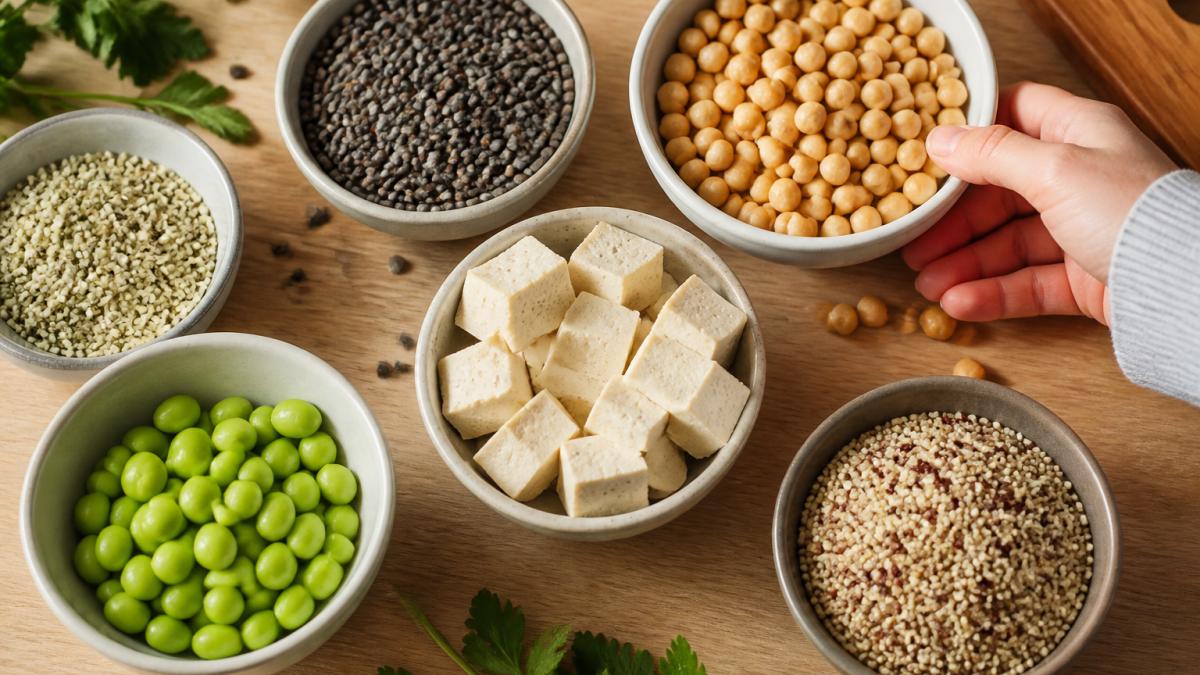
A few things worth noticing in that table. Canned beans and lentils give you the most protein for the least money and effort, which is why they’re the backbone of most beginner plans. Tofu and tempeh cost a little more but cook fast and absorb whatever flavor you give them.
A common mistake is buying specialty protein powders before trying whole foods. Skip that step. Canned chickpeas and a bag of red lentils will carry you through your first month, and they cost a fraction of what a tub of powder does.
If you’re building a pantry from scratch, buy one legume (lentils), one canned bean (chickpeas), one soy food (firm tofu), and one seed (hemp). That combination covers breakfast, lunch, and dinner for under a week’s worth of grocery budget in most households.
How to Get Enough Protein on a Vegan Diet: A Simple Daily Target
Most beginner guides tell you to ‘eat enough protein’ and leave it there. Here’s the number you actually need, and how to hit it without a food scale.
General guidance from public health bodies puts protein needs for most healthy adults at roughly 0.8 grams per kilogram of body weight per day, with many practitioners suggesting slightly more (around 1.0-1.2 g/kg) for people who are active, older, or recovering from illness. For a 70 kg (about 154 lb) adult, that works out to roughly 56-84 grams of protein a day. You don’t need to memorize your number. Use it as a rough target and check in every few days rather than every meal.
Here’s how that translates into simple portions:
- 1 cup cooked lentils ≈ 18g
- 1 cup canned chickpeas ≈ 12g
- 1/2 block firm tofu ≈ 18g
- 1 cup cooked quinoa ≈ 8g
- 2 tbsp peanut butter ≈ 8g
- 1 cup soy milk ≈ 7g
- 3 tbsp hemp seeds ≈ 10g
A pattern that works for most beginners: put a protein anchor at each meal. Breakfast gets soy milk or nut butter, lunch gets beans or tofu, dinner gets lentils or tempeh, and a snack fills any gap with edamame, hummus, or seeds. Three anchors a day plus whole grains at meals usually lands you in the 50-80g range without tracking.
You don’t need to count grams. Pick one protein anchor per meal, vary the source across the day, and check in once a week. If you’re tired, hungry, or recovering slowly from workouts, add one more anchor.
The British Nutrition Foundation’s guidance on plant-based diets explains that well-planned vegan diets can meet protein needs when calorie intake is adequate. The key word is ‘planned.’ If you’re eating enough total food and including protein-rich sources regularly, you’re almost certainly fine.
Do You Need to Combine Proteins at Every Meal?
No. The old advice about pairing rice and beans at every sitting is outdated. Your body maintains an amino acid pool, so eating a variety of protein sources across the day is enough. Focus on variety, not perfect pairing. A lentil curry at lunch and a tofu stir-fry at dinner covers the same ground as a carefully paired plate, and it’s a lot easier to sustain.
If you have kidney disease, are pregnant, or are managing a medical condition, talk to a registered dietitian before changing your protein intake. General guidance doesn’t replace individual advice.
Easy Vegan Protein Meals for Busy Beginners
Think in building blocks, not recipes. A protein base (lentils, tofu, chickpeas), a grain (rice, pasta, quinoa), and a vegetable gets you a complete meal in under twenty minutes.
- Lentil soup with crusty bread
- Tofu stir-fry over rice
- Chickpea and spinach curry
- Black bean tacos with avocado
- Tempeh sandwich with quick-pickled veg
If you want a shortcut, our 10 quick easy vegan recipes give you ready-made meal ideas that use these exact building blocks. And if you’re still deciding on a powder to fill gaps, our guide to choosing the best vegan protein powder walks through what to look for on the label.
Simple Vegan Protein Meal Ideas for a Full Day
Here’s a sample day that hits protein without stress.
Breakfast: Overnight oats with chia seeds and soy milk.
Lunch: Chickpea salad wrap with hummus.
Snack: Handful of edamame or roasted chickpeas.
Dinner: Lentil curry with rice.
That structure works because each meal carries one protein anchor. For fast evening options, our quick vegan family dinners under 30 minutes fit the same pattern.
No-Cook and Low-Prep Vegan Protein Sources
Some days you won’t cook. That’s fine. Keep these on hand:
- Canned beans, rinsed and ready
- Hummus with vegetables
- Edamame, steamed in the bag
- Hemp and chia seeds for sprinkling
- Ready-made tofu, marinated and baked
- Nut butters on toast or fruit
A common mistake is assuming no-cook means low protein. A bowl of chickpeas, hemp seeds, and tahini dressing delivers plenty with zero stove time.
Allergies, Intolerances, and Swaps for Common Vegan Proteins
Soy, gluten, and nut allergies are common reasons people struggle. Fortunately, swaps are straightforward.
- Soy-free: use lentils, chickpeas, or hemp instead of tofu.
- Gluten-free: skip seitan and choose quinoa, rice, or buckwheat.
- Nut-free: replace nut butters with sunflower seed butter.
For milk and cheese alternatives, our guide to dairy-free swaps covers plant-based milk and cheese options in detail. Watch out: some meat alternatives stack multiple allergens, so read labels carefully.
Start Your Vegan Protein Plan with Vegan Lifestyle
The barrier to protein on a vegan diet isn’t biology. It’s planning, and planning gets easier with practice. Beginners who build meals around legumes, soy, and seeds rarely fall short.
At Vegan Lifestyle, we’ve built a community around exactly this kind of practical guidance: curated nutritional insights, comfort-food recipes that don’t feel like rabbit food, and support for beginners who want to cook with confidence. If you’re ready to go further than protein alone, our ultimate guide to going vegan gives you the full step-by-step path.
Get started with Vegan Lifestyle and turn simple vegan protein sources into meals your whole household looks forward to.
Protein doesn’t have to be the thing that derails your plant-based start. With a handful of pantry staples and a simple daily pattern, you’ll cover your needs without tracking a single macro. Vegan Lifestyle is here to make that first month feel less like a science project and more like good food.
Frequently Asked Questions
What are the easiest vegan protein sources for beginners?
Start with lentils, chickpeas, tofu, tempeh, edamame, and hemp seeds. These are widely available, need little prep, and fit into meals you already eat. A half-cup of cooked lentils gives about 9 grams of protein, and a half-cup of tofu gives around 10 grams. Canned beans and pre-cubed tofu cut cooking time further. Keep two or three of these on hand each week and add them to soups, stir-fries, or grain bowls.
How can beginners get enough protein on a vegan diet?
Aim for a protein source at each main meal and one snack. For most adults, 1.0 to 1.2 grams of protein per kilogram of body weight is a reasonable starting target. A 70 kg person needs roughly 70 to 84 grams daily. Spread that across three meals and a snack: tofu scramble at breakfast, lentil soup at lunch, chickpea pasta at dinner, and edamame or nuts for a snack. This pattern makes the total easy to reach without tracking every bite.
Which plant-based foods are highest in protein?
Seitan, tempeh, tofu, edamame, lentils, and hemp seeds rank near the top. Seitan has about 25 grams per 100 grams, tempeh about 19 grams, and firm tofu about 17 grams. Among legumes, cooked lentils provide around 9 grams per half-cup, and chickpeas about 7 grams. Nuts and seeds add 5 to 7 grams per small handful. Use these as your base and round out meals with whole grains, which add another 3 to 6 grams per serving.
Do vegans need to combine proteins at every meal?
No. The old advice about pairing rice and beans at every meal is outdated. Your body stores amino acids throughout the day, so eating a variety of plant proteins across breakfast, lunch, and dinner covers your needs. Focus on variety rather than perfect pairing. A peanut butter sandwich at lunch and a lentil curry at dinner together supply all the essential amino acids, even though neither is a complete protein on its own.
Are beans and lentils good sources of protein?
Yes. Beans and lentils are among the most affordable and versatile vegan protein sources. One cup of cooked lentils has about 18 grams of protein, and one cup of black beans has about 15 grams. They also provide fiber, iron, and folate. Canned versions are ready in minutes after rinsing. Add them to salads, pasta, tacos, or soups. For beginners, lentils cook in about 20 minutes without soaking, making them the fastest dried legume to prepare.
What are easy high-protein vegan meals for beginners?
Try a tofu scramble with spinach on toast for breakfast, a chickpea salad wrap for lunch, and whole-wheat pasta with lentil marinara for dinner. Snack on roasted edamame or a handful of almonds. Each meal takes under 25 minutes and uses fewer than six ingredients. Batch-cook lentils or beans once a week and store them in the fridge so you can assemble meals quickly. These meals each deliver 15 to 25 grams of protein.
Can you get enough protein from a plant-based diet without supplements?
Yes, you can meet protein needs from whole plant foods alone. The exception is vitamin B12, which requires fortified foods or a supplement on a vegan diet. For protein, eat a variety of legumes, soy foods, grains, nuts, and seeds daily. Athletes or people with higher needs may find it easier to include protein powder, but it is not required. Focus on regular meals with a protein source and your intake will likely land in a healthy range.
