Last Updated: October 28, 2026
Quick Summary
Most vegans can get enough protein vegan style by aiming for about 0.8 grams per kilogram of body weight daily, or 1.0 to 1.2 grams if active. Spread that target across meals using beans, lentils, tofu, tempeh, nuts, seeds and whole grains.
- Most adults need roughly 0.8 grams of protein per kilogram of body weight each day.
- One cup of cooked lentils gives about 18 grams of protein, and tempeh gives closer to 15 grams per half cup.
- Aim for 15 to 20 grams of protein at breakfast, lunch and dinner, plus a snack of 8 to 10 grams.
- Eating a variety of protein sources across the day is enough, so special food pairing at each meal is unnecessary.
- Going very low on protein for long periods can cause fatigue and weakness, so check intake if you feel persistently tired.
Table of Contents.
- How Much Protein Do Vegans Need Each Day.
- High Protein Vegan Foods You Can Build Meals Around.
- Step 1: Set Your Daily Protein Target.
- Step 2: Build Each Meal Around a Protein Source.
- Step 3: Plan a Week of Vegan Protein Meals.
- Vegan Protein for Athletes and Active Adults.
- Booking Your Personalized Vegan Nutrition Plan at Vegan Lifestyle Pro.
- Frequently Asked Questions
How Much Protein Do Vegans Need Each Day.
Getting enough protein on a vegan diet is easier than most people think, and a simple daily plan makes it even simpler with enough protein vegan habits you can stick to. With a little planning, you can meet your needs with beans, tofu, nuts, seeds and whole grains. This guide turns a daily number into real portions and meals, so you are not guessing at the end of the day.
Most adults need roughly 0.8 grams of protein per kilogram of body weight each day, according to the Dietary Guidelines for Americans. Your personal target depends on your size, age and how active you are. To convert pounds to kilograms, divide your weight in pounds by 2.2. A 154 pound adult weighs about 70 kilograms and needs about 56 grams a day at the baseline.
Calculating your daily target by body size and activity level.
Multiply your body weight in kilograms by the factor that matches your life. Round to the nearest 5 grams so the number is easy to remember.
- Sedentary adults: about 0.8 grams per kilogram
- Regular exercisers: about 1.0 to 1.2 grams per kilogram
- Strength training or endurance athletes: 1.2 to 2.0 grams per kilogram
- Adults over 65: often 1.0 to 1.2 grams per kilogram to help preserve muscle
- Pregnancy and breastfeeding: higher needs, so follow your clinician’s guidance rather than a generic formula
A 70 kilogram regular exerciser, for example, lands near 70 to 84 grams a day. A 90 kilogram strength athlete lands near 108 to 180 grams. Those are wide ranges on purpose: the low end suits maintenance and the high end suits hard training blocks.
A simple protein calculator or food tracking app can do the math for you. Weigh yourself once, enter your activity level, and save the target as a note on your phone so you can check it each week.
Turning your target into portions.
A daily number means little without a portion guide, which is why this breakdown helps you reach enough protein vegan meals without guesswork. These are common cooked or ready-to-eat amounts, and labels vary by brand, so check the package for exact figures.
- 1 cup cooked lentils: about 18 grams
- 1 cup cooked black beans: about 15 grams
- 1/2 cup firm tofu: about 10 grams
- 1 cup cooked tempeh: about 30 grams
- 1 cup cooked quinoa: about 8 grams
- 2 tablespoons hemp seeds: about 6 to 7 grams
- 1 cup soy milk: about 7 to 8 grams
- 1 cup cooked oatmeal: about 6 grams
A 56 gram target breaks into roughly 15 to 20 grams at breakfast, lunch and dinner, plus a snack of 8 to 10 grams. That is one protein anchor per meal and one protein snack, which is far easier to hit than one large serving at dinner.
A low-friction way to check your intake.
You do not need to track forever. Pick three typical days, including one weekend day, and log what you eat in a notes app or a free tracker. Add up the protein at the end of each day. If you land within about 10 grams of your target on all three days, you are in good shape. If you are consistently short, add one protein anchor to breakfast or a snack rather than overhauling every meal.
Watch out: Going very low on protein for long periods can leave you feeling tired and weak, so do not cut back just to save calories. If you feel persistently fatigued, are losing muscle, or are recovering poorly from workouts, that is a signal to review your intake with a registered dietitian or clinician rather than self-diagnosing.
High Protein Vegan Foods You Can Build Meals Around.
Plant foods can cover your protein needs when you eat a variety of them across the day. Legumes, soy foods, nuts, seeds and grains each play a role. Many of these foods also bring fiber, iron and other nutrients. The sections below give you the gram counts and the quality context you need to build meals with confidence.
Beans, lentils, peas and chickpeas.
Legumes are some of the most affordable protein sources you can buy. One cooked cup of lentils provides close to 18 grams of protein, and a cup of black beans offers about 15 grams. A cup of chickpeas lands near 15 grams, and a cup of green peas near 8 grams. Keep a can or bag on hand for quick meals, and rinse canned beans to cut sodium.
Tofu, tempeh and other soy foods.
Soy foods are complete proteins, meaning they supply all nine essential amino acids in amounts your body can use. Half a cup of firm tofu typically gives around 10 grams of protein. Tempeh offers even more, closer to 15 grams per half cup, and it works well in bowls, tacos and stir-fries. Edamame adds about 9 grams per half cup, and soy milk adds 7 to 8 grams per cup.
Nuts, seeds, whole grains and protein-rich vegetables.
Hemp seeds, peanuts and pumpkin seeds add protein to smoothies, salads and oatmeal. Two tablespoons of hemp seeds give about 6 to 7 grams, and a quarter cup of peanuts gives about 9 grams. Quinoa, oats and sprouted grain bread add protein to your grain servings, with quinoa near 8 grams per cooked cup. Broccoli, spinach and green peas contribute smaller amounts that add up over the day.
Protein quality and the food combining myth.
Plant proteins are not inferior, but they are digested a little differently. Most plant foods are lower in one or two essential amino acids, and plant protein is generally absorbed somewhat less efficiently than animal protein. That does not mean you need to pair specific foods at every meal. Your body maintains a pool of amino acids, so eating a variety of protein sources across the day is enough for most people. The old advice to combine rice and beans at the same sitting is outdated for healthy adults eating enough total protein.
Eat a variety of legumes, soy foods, nuts, seeds and grains across the day, hit your total protein target, and you do not need to obsess over matching amino acids at each meal.
Soy, quinoa, hemp and buckwheat are complete on their own. Grains tend to be lower in lysine, and legumes tend to be lower in methionine, so a day that includes both covers the bases without any special pairing rules. If you rely on a single staple for most of your protein, variety matters more, and a registered dietitian can help you spot gaps.
The table below sums up the protein content of the key plant foods covered in this section, so you can compare them at a glance.
| Food | Serving | Protein |
|---|---|---|
| Lentils, cooked | 1 cup | About 18 grams |
| Black beans, cooked | 1 cup | About 15 grams |
| Tempeh | 1/2 cup | Closer to 15 grams |
| Firm tofu | 1/2 cup | Around 10 grams |
| Edamame | 1/2 cup | About 9 grams |
| Soy milk | 1 cup | 7 to 8 grams |
| Hemp seeds | 2 tablespoons | About 6 to 7 grams |
| Quinoa, cooked | 1 cup | Near 8 grams |
Step 1: Set Your Daily Protein Target.
Start by working out your number. Use the calculation above and write it down, so you have a clear goal. A simple protein calculator or food tracking app can make this easier to check each week.
- Weigh yourself in kilograms
- Multiply by 0.8, or by 1.2 to 1.6 if you are active
- Round to the nearest 5 grams for an easy daily goal
Step 2: Build Each Meal Around a Protein Source.
Pick one main protein for each meal, then add vegetables and grains around it. This keeps your protein steady across the day instead of loading it all into dinner.
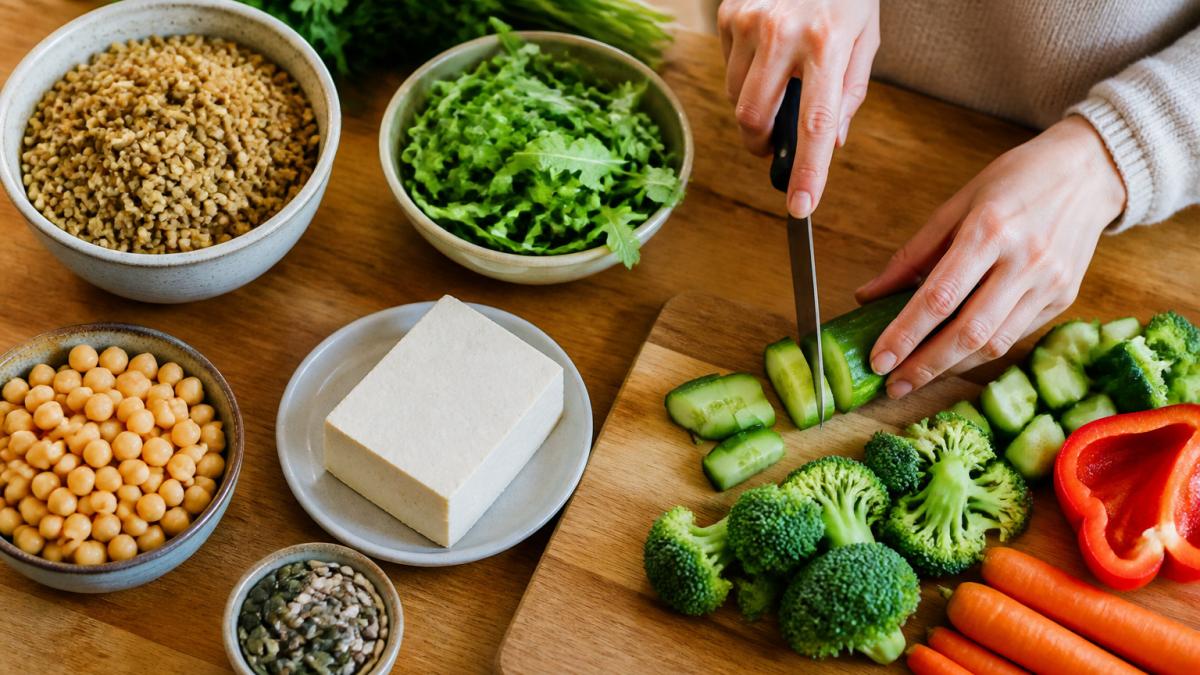
A simple formula works well: one palm-sized portion of protein, one fist of whole grains and two fists of vegetables. Aim for roughly 15 to 25 grams of protein at each meal and two or three snacks.
Step 3: Plan a Week of Vegan Protein Meals.
Planning a week ahead cuts down on last-minute takeout. Batch cook a pot of lentils or a block of tempeh on Sunday, and use them across several meals. For fast family dinners, check out Quick Vegan Family Dinners Under 30 Minutes for ideas that fit a busy schedule.
Quick Vegan Family Dinners Under 30 Minutes.
A sample day might look like this:
- Breakfast: oats with hemp seeds and soy milk, about 15 grams
- Lunch: lentil and vegetable soup with a slice of whole grain bread, about 20 grams
- Snack: roasted chickpeas, about 8 grams
- Dinner: tofu stir-fry with brown rice, about 25 grams
Vegan Protein for Athletes and Active Adults.
Active people need more protein to repair muscle. Good options include soy, lentils, seitan and a plant-based protein powder for convenience. If you are comparing powders, Ultimate Guide To Choosing The Best Vegan Protein Powder lays out what to look for on a label.
Ultimate Guide To Choosing The Best Vegan Protein Powder.
Spread your protein across four or five meals rather than one large serving. Many athletes find this supports recovery better. Amazonia Raw Protein Isolate is one option some readers consider, and this honest review covers how it tastes and mixes.
Amazonia Raw Protein Isolate Choc Coconut Review: Worth It?
Booking Your Personalized Vegan Nutrition Plan at Vegan Lifestyle Pro.
Vegan Lifestyle Pro offers curated nutritional guidance and practical recipes for beginners and experienced vegans. Visit our website to get started.
Frequently Asked Questions
Is tofu a complete protein?
Yes. Tofu contains all nine essential amino acids, so it counts as a complete protein even though it is made from soybeans. A 3-ounce serving of firm tofu typically provides around 8 grams of protein, and it works well in stir-fries, scrambles and soups. Pairing it with grains or vegetables adds fiber and variety to the meal. Tempeh, edamame and soy milk are also complete options that fit easily into a daily plan.
How can I get enough protein on a vegan diet?
Aim to include a protein source at every meal and at least one or two snacks. Good choices include lentils, beans, tofu, tempeh, edamame, seitan, nuts, seeds and high-protein vegan foods such as soy-based yogurt. Eating a variety of these foods across the day covers your amino acid needs without requiring strict food combining at each meal. Tracking your intake for a few days can show where you need to add more.
Do vegans need to combine proteins at every meal?
No. The body keeps a pool of amino acids and draws on it over the course of the day, so eating complementary proteins within a day is enough for most adults. Rice and beans or hummus with whole-grain pita are classic examples, but they do not need to appear in the same bite. Focus on eating a varied diet with several protein sources daily rather than on exact pairings.
