Last Updated: November 12, 2026
Quick Summary
Healthy plant based dinner ideas include quick meals built on beans, lentils, tofu and whole grains, such as chickpea spinach pasta, black bean taco bowls and red lentil soup. Most come together in about 25 minutes and feature vegetables, fiber and protein for satisfying weeknight meals.
- Chickpea and spinach pasta takes about 25 minutes and provides roughly 16 grams of protein per serving.
- A black bean taco bowl is the fastest entry point for beginners, requiring almost no chopping.
- Pressing tofu for 15 minutes before roasting teaches a technique that unlocks many tofu recipes.
- Red lentil soup simmers for 20 minutes and provides about 12 grams of protein and 9 grams of fiber per bowl.
- Fill half the plate with vegetables and limit added oil to about one tablespoon per serving for weight-conscious dinners.
Table of Contents
- Why Plant Based Dinners Work for Busy Households.
- Plant-Based Dinner Recipes for Beginners.
- Easy Healthy Plant Based Dinner Ideas for Weeknights.
- Healthy Plant Based Dinner Ideas for Weight Loss.
- Soups, Stews and Bean-Based Dinners.
- Tofu, Grain Bowls and Vegetable-Centered Entrees.
- Planning Balanced, Protein-Forward Dinners at Home.
- Frequently Asked Questions
Why Plant Based Dinners Work for Busy Households.
Plant based dinners are one of the most practical ways to feed a busy household well. Quick, pantry-friendly meals that still feel like real comfort food are a practical way to feed a busy household. The core idea is simple: vegetables, beans, lentils, tofu and whole grains form a filling base that works on a weeknight without a long shopping list.
Many households find that plant based meals are easy to stretch. A pot of lentil soup or a tray of roasted vegetables can cover dinner and leftovers for lunch the next day. That kind of planning saves time and reduces the number of decisions made at 6 p.m.
Families also tend to notice that a plant-forward plate keeps people full. Beans and whole grains add fiber, while vegetables bring volume without heaviness. These meals are a natural fit for parents who want nutritious food on the table without cooking two versions of dinner.
Plant-Based Dinner Recipes for Beginners.
Beginners often worry that vegan cooking means bland salads. In practice, a good plant based dinner depends on three things: a satisfying base, a strong sauce, and a bit of texture.
Here is a simple way to begin:
- Choose one base, such as rice, pasta or potatoes.
- Add a protein, such as chickpeas, lentils or tofu.
- Build flavor with garlic, onion, spices and a splash of acid like lemon juice.
- Finish with a crunchy or creamy topping, such as toasted nuts or a tahini drizzle.
Once these steps feel natural, beginners can move on to more involved dishes with confidence. The five recipes below are the ones most beginners return to because each one teaches a different skill without demanding much equipment.
Crispy Chickpea and Spinach Pasta. Boil 8 ounces of pasta. While it cooks, saute a diced onion in olive oil, add two minced garlic cloves, a teaspoon of smoked paprika and a pinch of red pepper flakes, then stir in one can of drained chickpeas and two handfuls of spinach. Toss with the pasta and a ladle of pasta water. Total time is about 25 minutes, and the dish serves four at roughly 420 calories and 16 grams of protein per serving.
Black Bean Taco Bowl. Warm one can of black beans with cumin and chili powder. Serve over rice with shredded cabbage, salsa and a spoon of avocado.
Sheet-Pan Tofu and Broccoli. Press a block of firm tofu for 15 minutes, cube it, toss with cornstarch and soy sauce, and roast at 425 degrees Fahrenheit with broccoli florets for 25 minutes. Serve with rice and a drizzle of peanut sauce.
Red Lentil Soup. Saute onion, carrot and celery, add one cup of red lentils, a can of diced tomatoes and four cups of vegetable broth, and simmer for 20 minutes. Red lentils break down and thicken the soup without any blending. A bowl provides about 12 grams of protein and 9 grams of fiber.
Stuffed Sweet Potato. Bake or microwave a sweet potato, then fill it with warmed black beans, corn, salsa and a spoon of plain plant based yogurt.
Watch out: Beginners often under-season plant dishes because they are used to meat carrying the flavor. Taste at every stage and add salt, acid and heat before serving rather than after.
For dietary needs, most of these recipes are naturally gluten-free if you choose gluten-free pasta and confirm your broth and soy sauce are gluten-free. The taco bowl and stuffed sweet potato are soy-free and nut-free as written. Each recipe serves four.
The five beginner recipes differ in time, calories and protein, so here is how they compare at a glance. For more approachable options, browse these quick and easy vegan recipes to build confidence in the kitchen.
| Recipe | Total time | Per serving | Key feature |
|---|---|---|---|
| Crispy Chickpea and Spinach Pasta | About 25 minutes | About 420 calories, 16 g protein | Teaches sauteing and building flavor |
| Black Bean Taco Bowl | Quick, one can of beans | About 480 calories, 15 g fiber | Fastest entry point with no extra chopping |
| Sheet-Pan Tofu and Broccoli | Press 15 minutes, roast 25 minutes | Served with rice and peanut sauce | Teaches pressing and roasting tofu |
| Red Lentil Soup | Simmer 20 minutes | About 12 g protein, 9 g fiber | Thickens without blending |
| Stuffed Sweet Potato | Bake or microwave | Lowest-effort option | Good fallback on low-energy nights |
Easy Healthy Plant Based Dinner Ideas for Weeknights.
Weeknight dinners need to be fast, forgiving and easy to clean up. A chickpea curry with frozen spinach, a black bean taco bowl, or a quick vegetable stir-fry with tofu can all be on the table in about 30 minutes. Keep canned beans, dried pasta and frozen vegetables stocked so these meals are always possible.
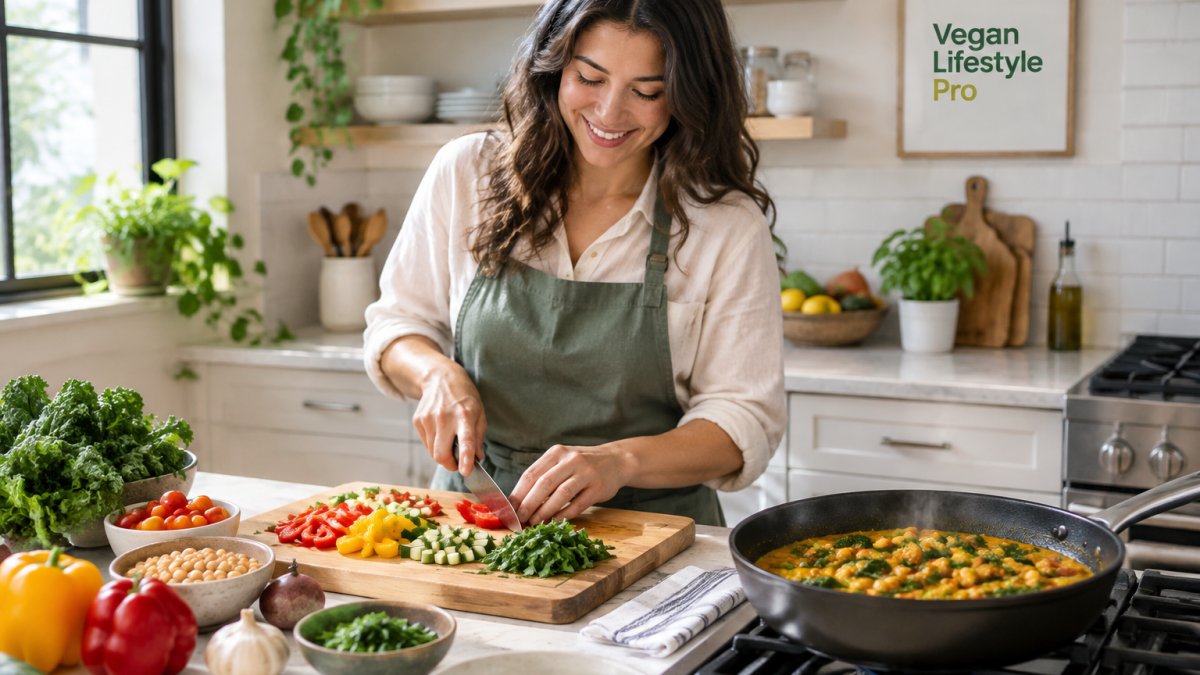
A common mistake is overcomplicating the recipe. Pick three or four ingredients you already like, season well, and cook a little extra for the next day.
Healthy Plant Based Dinner Ideas for Weight Loss.
Plant based dinners can support weight management because they tend to be high in fiber and water-rich vegetables, which help people feel full for longer.
The mechanism matters more than the label. Fiber slows digestion and triggers satiety signals, protein preserves lean mass during a calorie deficit, and the water content of vegetables adds volume without adding many calories.
Focus on meals that are satisfying rather than restrictive. The examples below show how the numbers work in practice.
Grain Bowl with Roasted Vegetables and Chickpeas. Use half a cup of cooked quinoa, one cup of roasted vegetables and three quarters of a cup of chickpeas with a tahini sauce. This comes in around 450 calories with 16 grams of protein and 12 grams of fiber.
Stuffed Sweet Potato with Black Beans. A medium sweet potato with half a cup of black beans, salsa and a spoon of plant based yogurt provides about 350 calories, 12 grams of protein and 11 grams of fiber.
Tofu and Vegetable Stir-Fry. A five-ounce portion of firm tofu with two cups of mixed vegetables and a soy-ginger sauce over half a cup of brown rice delivers roughly 420 calories and 22 grams of protein.
A few practical rules help. Keep added oils to about one tablespoon per serving, since fat is calorie dense even when it is healthful. Choose whole grains over refined ones for the extra fiber.
Watch out: Plant based does not automatically mean low calorie. Vegan cheeses, coconut-based creams, refined pastas and generous nut butters can push a dinner past 700 calories without much protein, so read labels and measure the calorie-dense additions.
For dietary filters, the lentil soup and stuffed sweet potato are gluten-free and soy-free as written. The grain bowl is gluten-free if you confirm the tahini and broth. The stir-fry is nut-free if you skip the peanut garnish.
Soups, Stews and Bean-Based Dinners.
Soups and stews are some of the most forgiving plant based dinners. You can follow a full recipe for vegan tomato soup with homemade vegan bread to serve with it. A tomato and white bean soup, a hearty lentil stew or a chili made with three beans can be made in one pot and frozen in portions. Bean-based dinners also deliver protein and fiber in a single dish, which makes them a reliable choice for busy evenings.
For a complete meal, serve a bowl of soup with a slice of crusty bread or a simple green salad. Many families find that these dishes improve after a day in the fridge, so cooking ahead is an easy win.
Tofu, Grain Bowls and Vegetable-Centered Entrees.
Tofu, grain bowls and vegetable-centered entrees bring variety to a weekly menu. Press firm tofu, toss it in cornstarch and spices, and roast until crisp. Pair it with brown rice, roasted broccoli and a peanut or tahini sauce for a balanced bowl.
Grain bowls are also flexible. Use quinoa, farro or rice as the base, then add seasonal vegetables, a legume and a sauce. Roasted cauliflower, sweet potato and kale work well together. Vegetable-centered entrees such as stuffed peppers or roasted squash can make a dinner feel special without much extra effort.
Planning Balanced, Protein-Forward Dinners at Home.
Protein-forward dinners are easier to plan when you build each meal around a clear source. Lentils, chickpeas, black beans, edamame, tofu and tempeh all contribute protein, and combining them with whole grains and vegetables creates a well-rounded plate. If you want to round out your protein intake, see this guide to choosing a vegan protein powder. Many people find that choosing one protein source per dinner keeps planning simple.
A weekly rhythm can help. Plan two bean-based dinners, two tofu or tempeh dinners, and one soup or stew for leftovers. Keep a shopping list of staples so you always have the ingredients on hand. Storing cooked grains and beans in the fridge for up to four days, and freezing soups for longer, makes reheating a quick process.
Vegan Lifestyle offers plant-based recipes and practical nutrition guidance to help readers plan balanced dinners at home. For a broader overview, read this ultimate guide to going vegan.
Ready to make plant based dinners a regular part of your week? Explore practical recipes from Vegan Lifestyle Pro and start with one new meal tonight.
Frequently Asked Questions
What are some examples of healthy plant-based meals?
Healthy plant-based dinners often center on beans, lentils, tofu, whole grains and vegetables. Good examples include a black bean and sweet potato chili, a lentil and kale soup, a chickpea and quinoa bowl with tahini dressing, and a roasted vegetable pasta made with whole wheat noodles. Each combines fiber, plant protein and produce in one plate. Start with one or two recipes you enjoy, then rotate them through the week so your dinners stay varied and balanced without extra planning effort.
Can plant-based dinners help with weight loss?
Plant-based dinners can support weight loss because vegetables, beans and whole grains are high in fiber and tend to be filling for their calorie count. Fiber slows digestion and helps you feel satisfied after a meal. Building plates around non-starchy vegetables and a protein source such as lentils or tofu, and keeping oils and portions modest, makes a meaningful difference. Weight loss still depends on your overall calorie intake, so pair these meals with consistent portions and regular activity.
What are easy plant-based dinners for beginners?
Beginners do best with simple formats that need few steps. One-pot lentil soup, sheet pan roasted vegetables with chickpeas, black bean tacos, and stir-fried tofu with frozen vegetables and brown rice are all practical choices. These recipes use common pantry staples, take about 30 minutes or less, and tolerate small ingredient swaps. Once these feel comfortable, you can experiment with more involved dishes like curries or stuffed squash.
How can I make a plant-based dinner balanced and filling?
A balanced plant-based dinner pairs a protein source, a complex carbohydrate and vegetables. Good protein options include lentils, beans, tofu, tempeh and edamame. Pair them with brown rice, quinoa, potatoes or whole-grain pasta, then add a generous portion of cooked or raw vegetables. Include a source of healthy fat such as avocado, nuts or a drizzle of olive oil. This combination keeps you full longer and supports steady energy through the evening.
