Last Updated: November 17, 2026
Quick Summary
The best vegan nutritional guide for 2026 starts with a daily chart covering legumes, whole grains, nuts, seeds, fruit, vegetables, and fortified plant milk. Anchor every meal with a protein source, and treat vitamin B12 and vitamin D as non-negotiables confirmed with a clinician.
- Build each plate around legumes, soy foods, or grains instead of counting protein grams.
- Aim daily for 2 to 3 legume servings and 1 to 2 cups of fortified plant milk.
- Get baseline B12 and vitamin D labs before buying supplements, then retest after a few months.
- Pair iron-rich foods with vitamin C and keep tea or coffee an hour or two away from meals.
- Buy dried beans and lentils in bulk and choose frozen produce when fresh costs more.
Table of Contents
- Why a Well-Planned Vegan Diet Still Needs a Guide in 2026.
- The Vegan Diet for Beginners: What to Eat and What to Skip.
- How to Get Enough Protein Vegan Without Counting Every Gram.
- Your Vegan Diet Chart for Daily Portions and Food Variety.
- Vitamin B12 and Vitamin D: The Two Supplements Most Vegans Need.
- Vegan Calcium Sources Beyond Fortified Milk.
- Iron, Omega-3s, and the Absorption Details That Decide Your Levels.
- A Budget-Conscious Vegan Shopping Plan That Still Covers Nutrients.
- Sample Menus With Nutrient Coverage for Busy Weekdays.
- Build Your 2026 Plate With Vegan Lifestyle Pro.
- Frequently Asked Questions
Why a Well-Planned Vegan Diet Still Needs a Guide in 2026.
A plant-based plate can look healthy and still fall short on the nutrients your body quietly depends on. That gap is exactly why we built this vegan nutritional guide: to turn vague advice into a working daily plan you can actually follow. Many beginners and long-time vegans find that eating well without guesswork comes down to planning. People who plan around a handful of key nutrients tend to thrive. People who simply cut out animal foods often drift toward fatigue, weak iron stores, and low vitamin B12. This guide walks through what to eat, how much, and where the real pitfalls hide.
The Vegan Diet for Beginners: What to Eat and What to Skip.
A vegan diet is a way of eating that excludes all animal products, including meat, poultry, fish, dairy, eggs, and honey, and centers instead on plants, legumes, grains, nuts, seeds, and fortified foods (the NHS). The word “well-planned” carries the weight here. A plate of fries and soda is technically vegan and nutritionally empty.
Foods That Build the Base of a Balanced Diet.
Build meals from a small set of dependable building blocks. You do not need exotic ingredients to eat well.
- Legumes: beans, lentils, chickpeas, and split peas
- Soy foods: tofu, tempeh, and edamame
- Whole grains: oats, brown rice, quinoa, and whole wheat
- Nuts and seeds: almonds, walnuts, flaxseed, chia, and hemp
- Fruit and vegetables across the color spectrum
- Fortified plant milks and cereals
Beginners often want a simple starter list before they build anything else, so we keep a dedicated breakdown of vegan protein sources for beginners that pairs each food with a portion size.
Nutrients of Concern and Why They Matter.
A short list of nutrients deserves your attention on any plant-based diet: protein, vitamin B12, vitamin D, calcium, iron, omega-3 fatty acids, iodine, and zinc. These are the nutrients most likely to run low when animal foods disappear. The good news is that each one has reliable plant or fortified sources, and a little planning covers them all.
How to Get Enough Protein Vegan Without Counting Every Gram.
Getting enough protein vegan comes down to including a protein source at every meal rather than obsessing over grams. Most people do well by building each plate around legumes, soy foods, or grains and letting the totals add up naturally.
Here is the practical method we teach:
- Anchor breakfast with oats plus soy milk or a tofu scramble.
- Add beans, lentils, or chickpeas to lunch.
- Include tofu, tempeh, or edamame at dinner.
- Finish with a handful of nuts or seeds.
That rhythm lands most adults in a solid range without a food scale. If you want the deeper walkthrough on portions and plant sources, our guide on how to get enough protein on a vegan diet breaks it down meal by meal.
Your Vegan Diet Chart for Daily Portions and Food Variety.
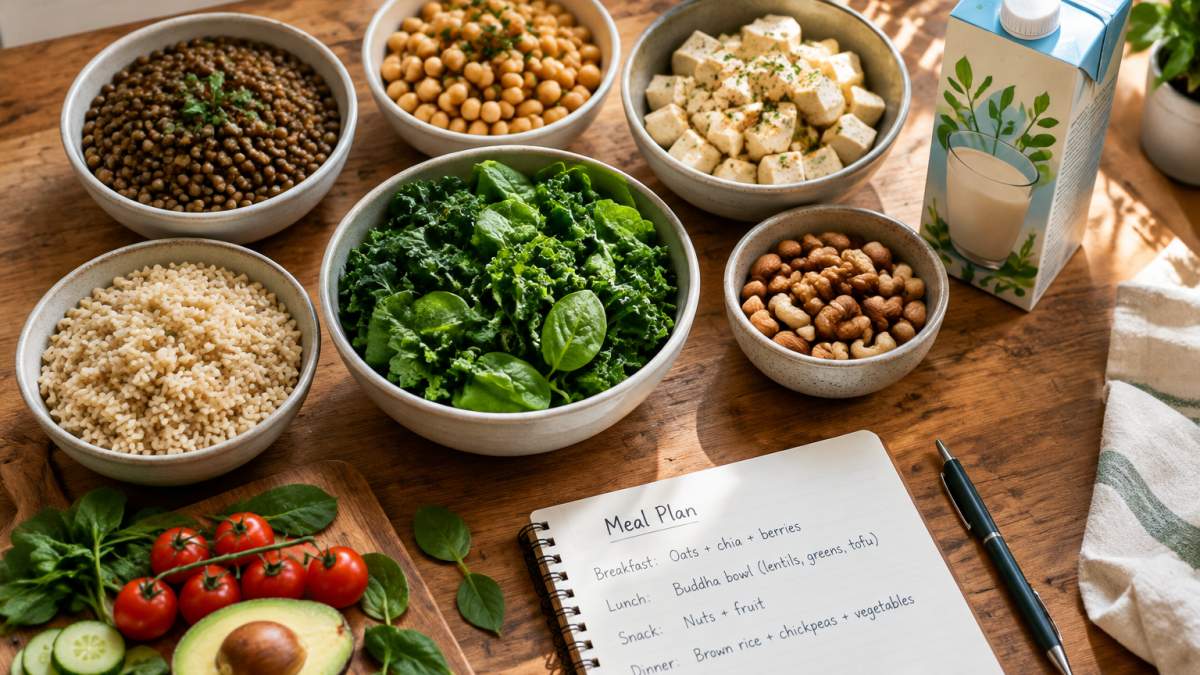
A vegan diet chart works best as a simple daily target rather than a rigid rulebook. Aim for variety across these groups and adjust portions to your appetite and activity level. What most charts leave out is that the same plate does not fit a teenager, a pregnant reader, and a 70-year-old equally. The table below sets a baseline, then the notes after it adjust for life stage.
| Food Group | Daily Target | Example Portion |
|---|---|---|
| Legumes | 2 to 3 servings | 1 cup cooked beans or lentils |
| Whole grains | 3 to 4 servings | 1/2 cup cooked rice or oats |
| Nuts and seeds | 1 to 2 servings | 1 ounce or 2 tablespoons |
| Fruit and vegetables | 5 or more servings | 1 cup raw or 1/2 cup cooked |
| Fortified plant milk | 1 to 2 cups | 1 cup |
Adjusting the Chart by Age, Sex, and Life Stage.
The baseline above suits a moderately active adult. The adjustments below show how needs can shift across life stages.
- Teens and young adults. Growth raises protein and calcium needs, so push legumes toward the top of the range and keep fortified plant milk at two cups. Iron needs are high in this group, especially for menstruating teens, so pair iron-rich foods with vitamin C at most meals.
- Pregnancy and lactation. Energy, protein, iron, iodine, and choline needs climb. Keep B12 and vitamin D supplementation confirmed with a clinician, add a second serving of legumes, and include iodine from iodized salt or a prenatal that lists it.
- Adults over 65. Appetite often falls while protein needs stay steady or rise, so concentrate protein into three anchors rather than grazing. Calcium and vitamin D matter more here because bone loss accelerates, and B12 absorption from food declines with age, which makes fortified foods and supplements more reliable than food alone.
- Athletes and physically demanding jobs. Add a protein serving at each meal and a recovery snack built on legumes plus a grain. Total calories rise, and so does the need for iron and zinc.
- Lower-calorie days. When overall intake drops, every serving has to work harder. Keep the fortified plant milk and the nuts and seeds even if grain portions shrink, because those two groups carry the nutrients most likely to fall short.
The chart is a starting point, not a cage. Rotate foods within each group so you pick up different vitamins and minerals across the week.
Watch out: Treating the baseline row as a universal prescription is a common mistake. A serving range built for a moderately active adult may not cover the needs of every life stage, so adjust with a clinician when needed.
Vitamin B12 and Vitamin D: The Two Supplements Most Vegans Need.
Vitamin B12 and vitamin D are the two nutrients where supplementation is the norm rather than the exception. B12 occurs naturally almost exclusively in animal foods, and vitamin D synthesis depends on sun exposure that many people do not get consistently. Fortified foods help, but amounts vary, so a reliable supplement is the safer route for most vegans. What follows is a decision guide rather than a prescription, because dose and form should be confirmed with a clinician who can see your labs.
Vitamin B12: Form, Dose, and Testing.
B12 is the one nutrient where a supplement is not optional for most vegans. The body stores it, so a deficiency can take years to surface, and by the time symptoms appear the neurological effects can be hard to reverse. That is why testing matters more than guesswork.
- Form. Cyanocobalamin is the most studied and stable form, and it is what most fortified foods and inexpensive supplements use. Methylcobalamin is another common form, and forms differ in price and stability. Either works; consistency matters more than the label.
- Dose pattern. Common approaches are a small daily dose or a larger dose a few times a week. Dosing varies by product and individual, so confirm the amount and schedule with your clinician. Chewable and sublingual forms are popular because absorption does not depend on stomach acid as much as tablets do.
- Testing. Ask for a serum B12 test, and consider methylmalonic acid or homocysteine if your B12 reads normal but you have symptoms. Those two markers catch functional deficiency that a plain B12 number can miss.
- Fortified foods. Nutritional yeast, fortified plant milks, and fortified cereals carry B12, but the amount per serving varies widely. Read the label and do not assume a food is fortified just because it is marketed to vegans.
Vitamin D: Form, Dose, and the Sun Question.
Vitamin D is the nutrient where latitude, season, skin tone, and sunscreen use all change the answer. Most people cannot rely on sun exposure alone year-round, and plant foods are poor sources unless they are fortified.
- Form. Vitamin D3 is the form most supplements use, and it is available in vegan versions derived from lichen. Vitamin D2 is also available in vegan form. Check the label for a vegan certification if that matters to you.
- Dose pattern. Dosing should be set with a clinician after a blood test. A 25-hydroxyvitamin D test is the standard way to check status, and it is worth doing before you settle on a dose.
- Timing. Vitamin D is fat-soluble, so take it with a meal that contains some fat. That detail is easy to miss and it affects absorption.
- Fortified foods. Fortified plant milks and some cereals and juices carry vitamin D, but the amounts are modest. They help, but they rarely close the gap on their own.
A Simple Supplement Decision Checklist.
- Get baseline labs for B12 and vitamin D before you buy anything.
- Choose a cyanocobalamin or methylcobalamin B12 and a vegan D3 if you want the most studied forms.
- Set a reminder so the dose pattern actually happens; missed doses are the real failure point.
- Retest after a few months and adjust with your clinician.
- Keep fortified foods in the rotation as a backup, not as the plan.
Watch out: Assuming a multivitamin covers both nutrients is a common trap. Many multis carry little or no vitamin D and a B12 amount that is fine for maintenance but too low to correct a deficiency, so read the label rather than trusting the front of the bottle.
If you are also weighing a protein powder as part of your routine, our guide to choosing the best vegan protein powder covers what to look for on the label.
Vegan Calcium Sources Beyond Fortified Milk.
Calcium is easier to source than most beginners expect. Fortified plant milks and juices carry meaningful amounts, and several whole plant foods contribute too.
- Calcium-set tofu
- Fortified plant milks and yogurts
- Tahini and sesame seeds
- Almonds
- Kale, bok choy, and collard greens
- White beans
The trick is consistency. Spread calcium sources across the day rather than loading them into one meal, and lean on fortified options if you avoid leafy greens.
Iron, Omega-3s, and the Absorption Details That Decide Your Levels.
Iron and omega-3s are where absorption details matter most. Plant iron is non-heme, which the body absorbs less efficiently than the iron in meat, so pairing matters. Vitamin C boosts absorption, while tea and coffee consumed with meals can block it. Keep those drinks an hour or two away from iron-rich meals.
For omega-3s, the body converts plant ALA from flaxseed, chia, and walnuts into EPA and DHA, but the conversion is limited. An algae-based EPA and DHA supplement closes that gap for people who want a direct source. Vegan Health’s nutrient guidance covers the science behind these absorption points in more detail, and it is a useful reference when you want to check a specific claim.
A Budget-Conscious Vegan Shopping Plan That Still Covers Nutrients.
Eating well on a budget is entirely doable when you lean on staples. The expensive items on a vegan grocery list are usually the specialty products, not the nutritious ones.
- Buy dried beans and lentils in bulk and cook them in batches.
- Choose frozen vegetables and fruit when fresh costs more.
- Build meals around rice, oats, and potatoes.
- Buy tofu and tempeh on sale and freeze what you will not use quickly.
- Skip pricey packaged snacks in favor of nuts, seeds, and fruit.
Families planning affordable groceries can follow a fuller vegan family costs budget guide that maps a week of meals against a realistic spending plan.
Sample Menus With Nutrient Coverage for Busy Weekdays.
A sample day shows how the pieces fit together without much effort.
- Breakfast: Oatmeal with soy milk, ground flaxseed, and berries.
- Lunch: Lentil soup with whole grain bread and a side of kale.
- Snack: Hummus with carrot sticks and a handful of almonds.
- Dinner: Tofu stir-fry with brown rice, broccoli, and sesame oil.
- Evening: Fortified plant yogurt with walnuts.
Each meal carries protein, and across the day you cover calcium, iron, and omega-3s. When you want to put these weekday meals into rotation fast, our collection of quick and easy vegan recipes gives you ready-to-cook options that match this structure.
Build Your 2026 Plate With Vegan Lifestyle Pro.
The best vegan nutritional guide for in 2026 is the one you actually use. Start with the daily chart, anchor every meal with a protein source, and treat B12 and vitamin D as non-negotiables you confirm with a clinician. That combination covers the nutrients of concern without turning mealtime into a spreadsheet. Vegan Lifestyle Pro offers plant-based comfort food recipes, nutritional tips, and a community-driven approach to sustainability and health. You get practical guidance whether you are a nervous beginner or a seasoned cook, plus the confidence to build plates that taste good and do their job. Get started with Vegan Lifestyle Pro and turn your plant-based plan into meals you look forward to.
Frequently Asked Questions
What nutrients should vegans pay special attention to?
The nutrients that need deliberate planning on a vegan diet are vitamin B12, vitamin D, calcium, iron, omega-3 fatty acids (EPA and DHA), and protein. Vitamin B12 appears naturally in almost no plant foods, so fortified foods and supplements carry that load. Iron from plants is absorbed less efficiently than iron from meat, so pairing beans and lentils with vitamin C sources helps. A vegan nutritional guide should treat these as nutrients of concern, not afterthoughts, and build daily portions around them.
How can vegans get enough protein?
Eat a protein source at every meal rather than saving it for dinner. Legumes, beans, lentils, tofu, tempeh, edamame, and whole grains all contribute. A simple habit works well: half a cup of cooked beans or lentils, or a palm-sized portion of tofu, at lunch and dinner, plus nuts, seeds, or soy milk at breakfast. Plant protein from varied sources across the day covers your needs without tracking every gram.
Do vegans need to take supplements?
Vitamin B12 is the one supplement nearly every vegan needs, because plant foods do not supply it reliably. Vitamin D depends on sun exposure and fortified foods, so many people benefit from a supplement, especially in winter or with limited sun. Whether you need iron, calcium, or omega-3 supplements depends on your diet and lab results. Ask a clinician or registered dietitian before starting anything beyond B12 and D.
How can vegans get enough calcium?
Fortified plant milks and yogurts are the easiest vegan calcium sources, since they are formulated to match dairy levels. Also lean on calcium-set tofu, tahini, almonds, kale, bok choy, and broccoli. Oxalates in spinach and Swiss chard block absorption, so those greens count less than kale or bok choy. Spreading calcium across meals rather than loading it into one helps your body absorb it.
Is a vegan diet healthy long term?
Research on well-planned vegan diets links them to higher fibre intake, lower saturated fat, and more fruit and vegetables, which supports heart health and weight management. The caveat is planning: nutrient adequacy depends on covering B12, vitamin D, calcium, iron, and omega-3s consistently. Long-term vegans who monitor these and eat a varied diet generally do well. Anyone with kidney disease or other conditions should get individualized nutrition guidance.
How can beginners plan balanced vegan meals?
Start with a template: a protein source, a whole grain, plenty of vegetables, and a healthy fat at each meal. Add a fortified plant milk for calcium and B12, and a daily B12 supplement. Use a vegan diet chart to check portions weekly rather than daily, and keep frozen vegetables, canned beans, and tofu on hand for busy nights. Beginners do best building five or six go-to meals before expanding.
