Last Updated: November 24, 2026
Quick Summary
To maintain a vegan diet long-term, build repeatable habits instead of relying on willpower: spread plant protein across all three meals, run a nutrient checklist covering B12, vitamin D, iron, iodine, selenium, calcium, zinc and omega-3s, and plan meals around one anchor day with five dinners, batch-cooked components and a pantry backstop. Return to the routine after lapses rather than restarting.
- Aim for a palm-sized portion of a protein food at each meal.
- Vitamin B12 cannot reliably come from unfortified plant foods, so choose fortified foods or supplements.
- Pair iron-rich foods with vitamin C, and keep coffee and tea an hour away from meals.
- Sketch five dinners, not seven, and shop once on your anchor day.
- Batch cook components like grains, roasted vegetables and proteins rather than finished meals.
Table of Contents
- Why a Vegan Diet Fails Without a System.
- How to Get Enough Protein Vegan Meals Every Day.
- Vegan Nutrition Tips That Cover the Gaps.
- Vegan Meal Planning That Survives a Busy Week.
- Frequently Asked Questions
Why a Vegan Diet Fails Without a System.
Most people quit a vegan diet because they treat it as a test of willpower. It is not. It is a question of whether your kitchen, shopping list, and weekly routine can carry the load on a tired Tuesday.
Willpower runs out. Systems do not. A person who plans three dinners and keeps beans, rice, and frozen vegetables on hand will still be eating plant-based in month six.
So how do you maintain a vegan diet long-term? You build small habits that repeat without effort. Below are four that do the heavy lifting, plus the protein, nutrition, and planning details that keep a vegan diet working for years rather than weeks.
How to Get Enough Protein Vegan Meals Every Day.
The direct answer: spread plant protein across all three meals instead of saving it for dinner. Beans, lentils, tofu, tempeh, and whole grains all count, and they add up faster than most new vegans expect.
Aim for a palm-sized portion of a protein food at each meal. Oatmeal with soy milk, lentil soup at lunch, and a tofu stir-fry at dinner covers the day without math.
The bigger mistake is the wrong substitute. A flax egg binds muffins but fails in meringues, and coconut cream behaves nothing like heavy cream when heated. Test each swap for the job it must do: bind, lift, or add richness.
For a deeper walkthrough of plant protein sources and daily amounts, see our guide on how to get enough protein vegan. Once the basics click, put them to work with these easy high protein vegan meals.
Vegan Nutrition Tips That Cover the Gaps.
A well-planned vegan diet can meet most nutrient needs, but a handful deserve deliberate attention. Treat this as a checklist you run once, then refine with your clinician over time.
Vitamin B12. This is the one nutrient you cannot reliably get from unfortified plant foods. Fortified plant milks, fortified cereals, nutritional yeast, and supplements are the dependable sources. Check labels, because fortification varies by brand. Ask your clinician before choosing a dose.
Vitamin D. Sun exposure is unreliable across seasons and latitudes, and plant sources are limited. Fortified foods help, but many people need a supplement. A blood test is the only way to know where you stand.
Iron. Plant iron (non-heme) is absorbed less efficiently than heme iron, so pair iron-rich foods like lentils, beans, tofu, spinach, and fortified cereals with vitamin C sources such as citrus, peppers, or tomatoes at the same meal. Coffee and tea within an hour of a meal reduce absorption. Confirm an iron need with a test before starting supplementation.
Iodine and selenium. Iodized salt covers iodine for most people, and a single Brazil nut or two a day covers selenium for most adults. Do not overdo Brazil nuts, because selenium has a narrow safe range.
Calcium and zinc. Calcium-set tofu, leafy greens like kale and bok choy, tahini, seeds, and legumes are useful calcium sources. Pair zinc-rich foods with protein-containing meals for better uptake.
Omega-3 fatty acids. Plant sources include flaxseed, chia seeds, hemp seeds, and walnuts. Grind flaxseed so it absorbs, and consider an algae-based omega-3 supplement if your intake is low. Discuss the right option with your clinician.
Variety helps, but B12 in particular needs a deliberate source, and vitamin D often needs a test before a decision. Individual needs vary widely with age, pregnancy, medications, and health conditions, so treat this list as a starting point for a conversation with a registered dietitian or clinician. For a full reference, read our vegan nutritional guide.
Here is the nutrient checklist the article recommends running once and then refining with a clinician.
| Nutrient | Dependable plant sources | Key note |
|---|---|---|
| Vitamin B12 | Fortified plant milks, fortified cereals, nutritional yeast, supplements | Cannot reliably get from unfortified plant foods |
| Vitamin D | Fortified foods, supplements | Sun exposure unreliable; blood test only way to know |
| Iron | Lentils, beans, tofu, spinach, fortified cereals | Pair with vitamin C; coffee and tea reduce absorption |
| Iodine | Iodized salt | Covers iodine for most people |
| Selenium | One or two Brazil nuts a day | Do not overdo; narrow safe range |
| Calcium and zinc | Calcium-set tofu, kale, bok choy, tahini, seeds, legumes | Pair zinc-rich foods with protein-containing meals |
| Omega-3 fatty acids | Flaxseed, chia seeds, hemp seeds, walnuts | Grind flaxseed; consider algae-based supplement |
Vegan Meal Planning That Survives a Busy Week.
Meal planning is the habit that makes the other three stick, but most plans fail for predictable reasons: no time on the night it matters, no backup when plans change, and no system for travel or eating out. The routine below is built to absorb those shocks.
Pick one anchor day and one anchor hour. Sketch five dinners, not seven, and shop once. Leaving two nights open is the buffer that keeps the plan alive when a meeting runs late or a friend invites you out.
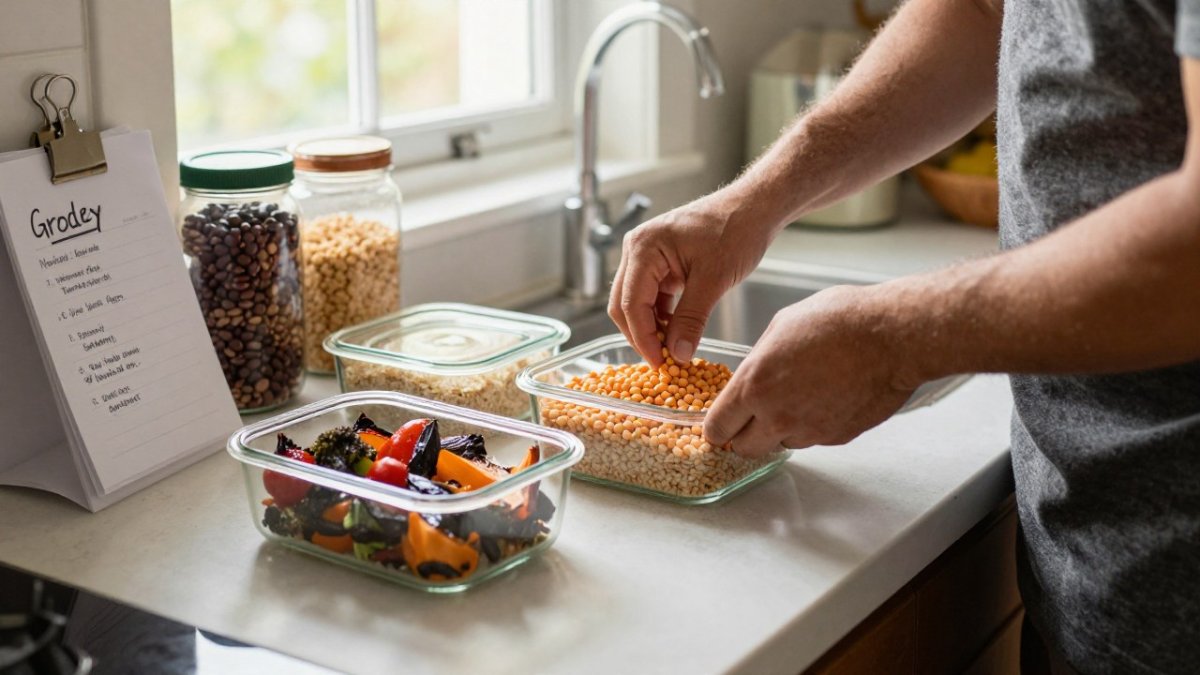
Batch cook in components, not finished meals. Cook a pot of grains, roast a tray of vegetables, and prep one or two proteins on your anchor day. Components recombine into bowls, wraps, and stir-fries across the week, which prevents the boredom that kills finished-meal batch cooking by Thursday.
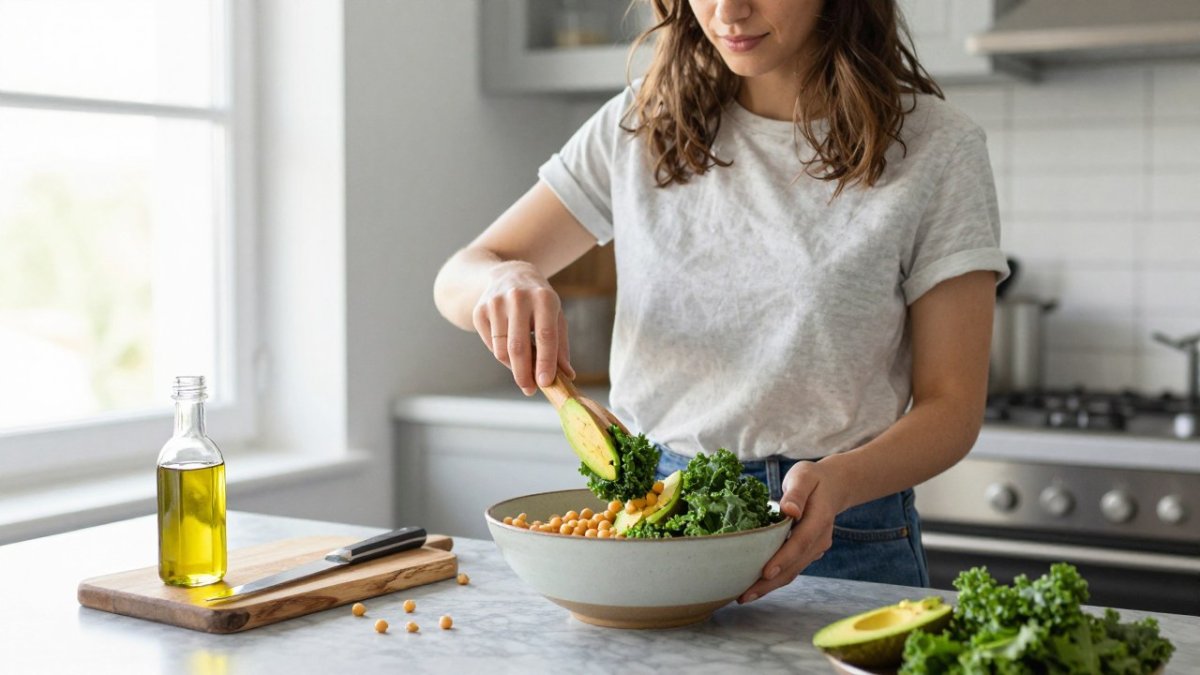
Build a sample week with portions. Breakfast: oatmeal with fortified soy milk, ground flaxseed, and fruit. Lunch: a lentil and vegetable soup with whole-grain bread. Dinner: a tofu and broccoli stir-fry over brown rice. Snacks: hummus with carrots, walnuts, or fortified plant yogurt. Rotate the protein and grain each day.
Keep a pantry and freezer backstop. Canned beans, frozen vegetables, frozen fruit, rice, pasta, and a jar of tahini are the reason the plan survives a bad week. Restock them on the same anchor day so the backstop never runs dry.
Plan for the barriers, not just the meals. For travel, pack shelf-stable protein and look up one or two plant-friendly options before you go. For social meals, eat a small snack beforehand and scan the menu for the dish closest to your usual pattern. For fatigue, keep a fifteen-minute fallback meal in rotation, such as a bean and frozen-vegetable bowl with a quick sauce.
Handle lapses without all-or-nothing thinking. A week of imperfect eating is not a reset. Return to the next anchor day and resume the routine. The people who sustain this diet for years are not the ones who never slip. They are the ones who have a system to return to.
Watch the budget. Budget-conscious eating leans on lentils, beans, oats, rice, frozen vegetables, and seasonal produce, with fortified plant milks and tofu as affordable protein anchors.
At Vegan Lifestyle Pro, every recipe is made at least three times in a regular home kitchen before we publish it. For tested apps that speed up planning, see the best vegan meal planning apps, and refresh a tired rotation with these quick and easy vegan recipes.
Long-term plant-based eating is not about perfection. It is about building a kitchen and a routine that keep working when life gets loud. Vegan Lifestyle Pro helps you get there with comfort food recipes, practical nutrition guidance, and a community that keeps you going.
Frequently Asked Questions
Can a vegan diet be healthy long term?
Yes, when it is well planned. A vegan diet built on legumes, whole grains, fruits, vegetables, nuts, and seeds covers most nutrient needs, but vitamin B12 must come from fortified foods or a supplement because plants do not supply it reliably. Vitamin D, iodine, iron, and omega-3 fatty acids deserve attention too. The people who thrive for years are the ones who plan meals, keep fortified staples in the pantry, and check their levels with a doctor rather than guessing.
What are practical ways to stay consistent with vegan habits?
Keep a short list of meals you can cook in 30 minutes, batch-cook one grain and one legume each week, and stock pantry staples so a tired night never forces a decision. At Vegan Lifestyle Pro, we test every recipe at least three times in a regular home kitchen before publishing, using no more than 10 everyday grocery store ingredients. That testing matters because most failed vegan recipes come from the wrong substitute for the job, not from bad cooking.
What should I do if maintaining a vegan diet feels difficult?
Treat difficulty as information, not failure. Find the specific barrier: bland flavor, too much prep time, or a missing nutrient. A flat dish usually lacks umami, fat, acid, or salt, so try miso, tomato paste, mushrooms, or soy sauce before abandoning the meal. If time is the problem, lean on batch cooking and frozen vegetables. A flexible approach beats perfect adherence, and one imperfect week does not undo years of plant-based eating.
