Last Updated: November 14, 2026
Quick Summary
Sustainable plant based living works best when you change one meal at a time instead of your whole diet at once. Stock a pantry of beans, lentils, rice, oats and canned tomatoes so a real meal is always twenty minutes away. Plan by category, shop seasonally and cook from what you already have to cut cost and waste.
- Make one meal plant based for two weeks before changing anything else.
- Keep canned beans, dried lentils, rice, oats and nut butter stocked at all times.
- Pair iron-rich foods like lentils and spinach with vitamin C for better absorption.
- Check with a qualified healthcare provider about vitamin B12 supplementation.
- Assign weekly themes like grain bowl night and soup night to avoid decision fatigue.
Table of Contents
- Sustainable Plant Based Living Tips for Beginners.
- Your Plant Based Diet Food List for a Well-Stocked Kitchen.
- How to Plan a 30 Day Plant Based Diet Plan Without Burnout.
- Eat With the Seasons to Cut Cost and Waste.
- Make It Budget-Friendly: Waste Less, Cook More.
- Navigate Social and Cultural Moments Without the Awkwardness.
- Turn Sustainable Plant Based Living Into a Daily Habit.
- Pick Your First Week of Meals With Vegan Lifestyle Pro.
- Frequently Asked Questions
Sustainable Plant Based Living Tips for Beginners.
Most people quit a plant based diet in the first month, and it is rarely because they miss meat. They quit because they tried to change everything at once.
Plant based eating is not a test you pass or fail. It is a set of habits you stack until the default meal on your plate just happens to be plants.
Start With One Meal, Not One Diet.
The biggest mistake beginners make is declaring a full diet change on a Monday. Pick one meal, usually breakfast or lunch, and make it plant based for two weeks before you touch anything else. Oatmeal with fruit, a bean burrito, a peanut butter sandwich: these are foundations, not compromises. Once that meal feels automatic, add the next one. Habit formation beats willpower every time.
Build a Pantry That Carries You.
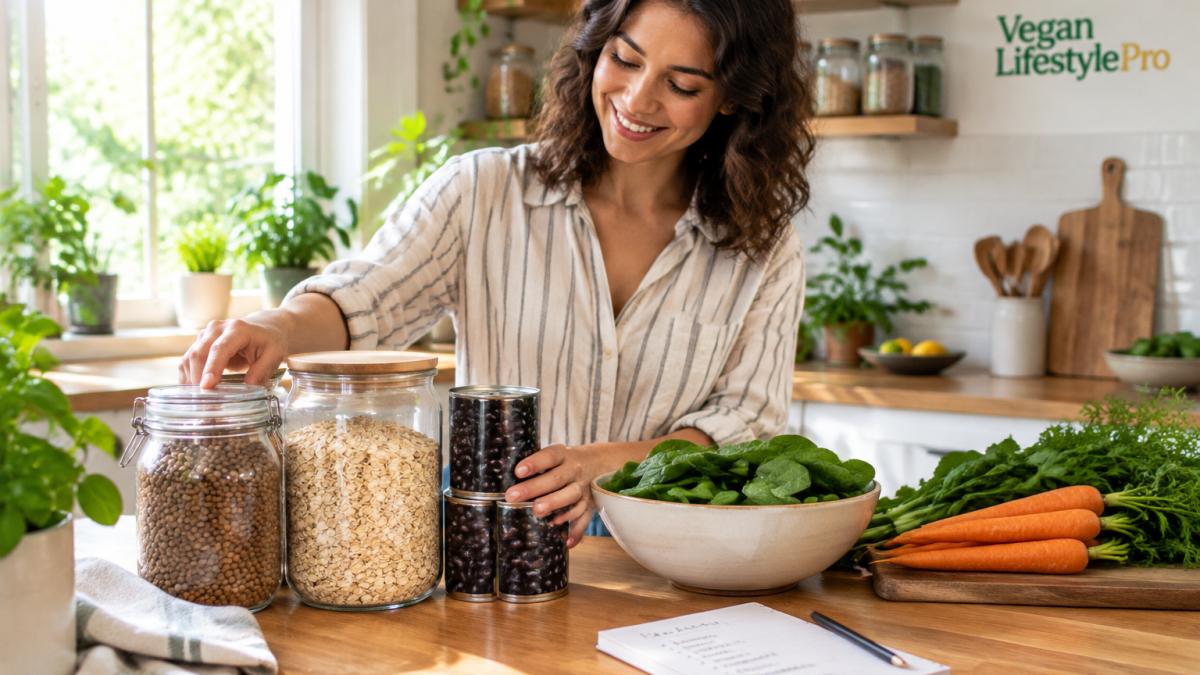
A well-stocked pantry is the difference between cooking dinner and ordering dinner. Keep canned beans, dried lentils, rice, oats, canned tomatoes, and nut butter on hand at all times. These staples mean you are never more than twenty minutes from a real meal, even on nights you did not plan.
Your Plant Based Diet Food List for a Well-Stocked Kitchen.
A plant based diet food list is simply the short set of staples that lets you build meals without thinking. Focus on whole-food, nutrient-dense ingredients first: legumes, whole grains, vegetables, fruit, nuts, and seeds. Then add the extras that make food taste good, like herbs, spices, and plant milks.
Protein, Iron, and B12: What to Put on the List.
Protein is easier than most beginners expect. Legumes, tofu, tempeh, whole grains, and nuts all contribute to daily intake. For a simple starting point on protein, our guide to vegan protein sources for beginners breaks down options, serving sizes, and easy meal ideas.
Calcium deserves a line on your list too. Fortified plant milks, tofu set with calcium sulfate, tahini, and leafy greens like collards and bok choy all contribute.
Read the Label Before You Trust the Package.
The front of a box is marketing. First, scan the ingredient list for added sugars, which appear under names like cane syrup, brown rice syrup, and fruit juice concentrate. Second, compare sodium across canned beans and broths, and rinse canned beans to remove a meaningful share of the surface sodium. Third, confirm fortification on plant milks and cereals, since B12, vitamin D, and calcium are added rather than naturally present.
Watch out: “Plant based” on a package is not a regulated claim in the same way “organic” is, so a product can carry the phrase while still containing dairy, egg, or honey. If you are avoiding animal products entirely, read the allergen statement and the ingredient list rather than trusting the front label.
Build the List in Three Tiers.
Organize your shopping around three tiers so the pantry stays functional instead of aspirational. The base tier is shelf-stable protein and grain: canned or dried beans, lentils, rice, oats, and pasta. The middle tier is flavor and fat: olive oil, tahini, nut butter, canned tomatoes, and a spice set covering smoked paprika, cumin, garlic powder, and nutritional yeast. The top tier is perishable and bought weekly: fresh vegetables, fruit, tofu, and tempeh.
How to Plan a 30 Day Plant Based Diet Plan Without Burnout.
A 30 day plant based diet plan fails when it is built on novelty instead of rhythm. The fix is to plan by category, not by recipe. Assign themes to your week, such as a grain bowl night, a soup night, and a stir-fry night, then rotate the ingredients inside each theme. For families who need speed, our collection of quick plant based meals for busy families is built around thirty-minute cooking and make-ahead shortcuts.
Eat With the Seasons to Cut Cost and Waste.
Seasonal produce is the quiet budget hack of plant based eating. When a vegetable is in season, it is cheaper, it tastes better, and it travels less, which lowers its carbon footprint. Build your weekly shop around whatever looks abundant and affordable, then let the recipe follow the ingredient. This habit reduces waste because you are buying food at its peak, when it lasts longer and needs less coaxing to taste good.
Make It Budget-Friendly: Waste Less, Cook More.
Budget-friendly plant based living is mostly a waste problem, not a price problem. The most expensive food in your kitchen is the food you throw away. Our easy vegan recipes for refreshing your meal plan are designed to use up odds and ends.
Comparing cost per serving rather than cost per package gives a clearer picture of value. The trade-off is time, which is why batch cooking on a single afternoon makes the savings real.
Store Food So It Actually Lasts.
Waste reduction is a storage skill before it is a cooking skill. Leafy greens last noticeably longer when washed, fully dried, and stored in a container lined with a paper towel. Fresh herbs keep best with their stems in a glass of water, loosely covered.
Watch out: The freezer is not a landfill alternative. Freezing food you will never eat just delays the waste.
Shop With a Plan and a Flexible List.
A grocery list is a budget tool, but a rigid list backfires when it ignores what is actually on sale. Write your list by category, then leave one or two slots open for whatever whole food is discounted that week. Buy frozen vegetables for dishes where texture does not matter, since they are picked at peak ripeness and cost less than fresh out of season. Compare unit prices on the shelf tag rather than package prices.
Compost What You Cannot Save.
Even a careful kitchen produces scraps: peels, cores, coffee grounds, and wilted leaves. Composting closes the loop and turns that waste into soil instead of landfill methane. A countertop bin with a carbon filter handles daily scraps without odor, and a backyard pile or a municipal collection program handles the rest. If you garden, the finished compost feeds the herbs and greens you grow.
Navigate Social and Cultural Moments Without the Awkwardness.
The hardest part of plant based living is often other people, not the food. Family dinners, office lunches, and holiday gatherings all come with unspoken expectations. The move is to arrive prepared and low-key: bring a dish you love that happens to be plant based, eat before you go if you are unsure, and skip the lecture. If you are heading to a party, our vegan appetizers to share with guests give you something to bring that everyone will actually eat.
Turn Sustainable Plant Based Living Into a Daily Habit.
Habits stick when they are attached to something you already do. Pair a new plant based choice with an existing routine: the same breakfast every weekday, a meatless Monday that never moves, a grocery list template you reuse. Keep a short list of five meals you can cook without a recipe, and let those carry the weeks when motivation dips. Sustainable lifestyle change is not dramatic.
| Habit | What It Looks Like | Why It Lasts |
|---|---|---|
| One meal first | Plant based breakfast for two weeks | Small, repeatable, low risk |
| Pantry staples | Beans, grains, oats always stocked | Removes the takeout fallback |
| Category planning | Grain bowl night, soup night | Variety without decision fatigue |
| Seasonal shopping | Buy what is abundant | Lower cost, less waste |
| Batch cooking | One grain, one protein on Sunday | Weeknight dinners half done |
Pick Your First Week of Meals With Vegan Lifestyle Pro.
Start with seven dinners you are genuinely excited to eat, not seven you think you should eat. Comfort food counts. A rich lentil shepherd’s pie or a creamy pasta does more for long-term commitment than a week of raw salads ever will. Vegan Lifestyle, founded by Cedric, focuses on plant based comfort food recipes, with nutritional guidance and a community that supports the transition. When you are ready to plan your first week, our healthy plant based dinner ideas give you twenty satisfying recipes to choose from.
Building a plant based life that lasts is less about willpower and more about the systems you set up around yourself. If you want recipes that feel like comfort food, nutritional insight you can trust, and a community that meets you where you are, Vegan Lifestyle Pro is built for exactly that. Get started with Vegan Lifestyle Pro and cook your first plant based week with confidence.
Frequently Asked Questions
What are the core principles of sustainable plant based living?
Three principles carry most of the weight. First, eat mostly whole-food, nutrient-dense ingredients like legumes, whole grains, and vegetables rather than relying on processed alternatives. Second, plan meals so food gets eaten instead of thrown out, which lowers both your grocery bill and your carbon footprint. Third, treat nutrition as ongoing: check vitamin B12 supplementation, calcium absorption, and omega-3 fatty acids rather than assuming a plant based diet covers everything. Sustainable plant based living is less about perfection and more about habits you can repeat next month.
How do I balance nutrition while maintaining a sustainable lifestyle?
Build each plate around a plant-based protein source, add a fiber-rich vegetable, and finish with a whole grain. Rotate legumes, cruciferous vegetables, and whole grains across the week so micronutrients vary. Pay attention to the nutrients plant based eaters most often miss: vitamin B12, iron, calcium, and omega-3 fatty acids. Pair iron-rich foods with a source of vitamin C to improve absorption, and choose fortified plant milks for calcium. A 30 day plant based diet plan makes this easier because the rotation is already mapped out.
What are common mistakes to avoid when transitioning to plant based living?
The most common mistake is swapping everything at once, which leads to decision fatigue and a fridge full of unused produce. Others include leaning on processed alternatives for most meals, skipping B12 supplementation, and shopping without a plant based diet food list, which leads to waste. Another trap is treating the change as a test of willpower rather than a skill you build. Start with one meal a day, keep a short list of meals you actually enjoy, and add variety as your confidence grows.
How can I make my plant based diet more environmentally friendly?
Focus on the parts you control: buy seasonal produce when it is available, plan meals before shopping to reduce waste, and cook from whole ingredients more often than packaged processed alternatives. Store leftovers in portions you will actually eat, and freeze what you cannot finish. Eating plant-forward already lowers your carbon footprint compared with meat-heavy meals, but the gains multiply when food gets eaten rather than discarded. Small, repeatable habits like these matter more than occasional perfect weeks.
