Last Updated: November 15, 2026
Quick Summary
Healthy vegan meal plans are worth it because they remove daily decisions: you shop once, cook in batches, and eat well all week. A good plan covers protein, vitamin B12, iron, calcium, and healthy fats, and tells you what to buy, what to cook, and how to repeat it next week.
- Build every meal around legumes, tofu, tempeh, and whole grains rather than treating protein as a side dish.
- Pair iron-rich plant foods with vitamin C, like a squeeze of lemon over lentils, to improve absorption.
- Start beginners with five familiar meals made plant-based and repeat them for two weeks.
- Prep components like grains, roasted vegetables, and one sauce instead of seven identical containers.
- Judge any plan with a five-point checklist and skip anything scoring under 15.
Table of Contents
- What a Healthy Vegan Meal Plan Should Include.
- The 7-Day Vegan Meal Plan With Grocery List That Saves You Time.
- A Healthy Vegan Meal Plan for Beginners.
- Free Healthy Vegan Meal Plans: What You Get and What You Miss.
- Vegan Meal Prep for the Week: Storage and Time-Saving Tips.
- Frequently Asked Questions
What a Healthy Vegan Meal Plan Should Include.
A healthy vegan meal plan is a structured daily eating guide built from whole plant foods that covers your protein, vitamin B12, iron, calcium, and healthy fat needs without animal products. We treat vegan meal plans as a practical tool, not a rulebook.
Most beginners worry about two things: getting enough protein and staying full. Both are solvable with legumes, tofu, tempeh, and whole grains.
Here is what a solid plan includes:
- A protein source at every meal, not just dinner.
- Whole grains and fiber-rich carbs for steady energy.
- Healthy fats from nuts, seeds, avocado, and olive oil.
- Leafy greens and seasonal produce most days.
Protein, B12, and Iron: The Nutrients That Matter.
Protein is easy to hit when you build meals around legumes, tofu, tempeh, and whole grains. A common mistake is treating protein as a side dish. Make it the base instead.
Vitamin B12 does not occur naturally in plant foods in reliable amounts.
Iron from plants is absorbed less efficiently than iron from meat. Pair iron-rich foods with vitamin C to improve absorption.
For a simple breakdown of what to shop for, see our guide to vegan protein sources for beginners. And if you want to put those nutrients into practice right away, our high protein vegan meals with easy recipes give you a starting point.
The 7-Day Vegan Meal Plan With Grocery List That Saves You Time.
A 7-day vegan meal plan with grocery list works because it removes daily decisions. You shop once, cook in batches, and eat well all week.
Here is the full week, mapped so ingredients repeat on purpose.
- Day 1. Breakfast: overnight oats with chia, banana, and fortified plant milk. Lunch: brown rice bowl with pan-seared tofu, shredded carrot, and lemon tahini. Dinner: red lentil curry with spinach over quinoa. Snack: apple with peanut butter.
- Day 2. Breakfast: tofu scramble with turmeric, spinach, and whole-grain toast. Lunch: leftover lentil curry over quinoa. Dinner: tempeh stir-fry with broccoli, bell pepper, and brown rice. Snack: hummus with cucumber and carrot sticks.
- Day 3. Breakfast: smoothie with frozen berries, flax, fortified plant milk, and a scoop of oats. Lunch: grain bowl with chickpeas, roasted sweet potato, and tahini. Dinner: black bean chili with corn and a side of steamed greens. Snack: handful of walnuts and an orange.
- Day 4. Breakfast: overnight oats with almond butter and sliced pear. Lunch: leftover black bean chili. Dinner: stuffed sweet potatoes with seasoned lentils and a green salad. Snack: edamame with sea salt.
The grocery list should match the meals exactly. Write it by category: produce, proteins, grains, pantry, and frozen.
A practical weekly list for this plan looks like this:
- Produce: bananas, apples, pears, oranges, berries (frozen is fine), spinach, broccoli, bell peppers, carrots, cucumbers, sweet potatoes, onions, garlic, mushrooms, lemons.
- Proteins: firm tofu, tempeh, red lentils, brown lentils, chickpeas, black beans, edamame.
- Grains: rolled oats, brown rice, quinoa, whole-grain bread, rice noodles.
- Pantry: tahini, peanut butter, almond butter, chia seeds, ground flax, walnuts, almonds, canned tomatoes, coconut milk, curry paste, soy sauce, olive oil, spices.
Watch out: buying fresh greens for all seven days usually leads to waste by day five. Buy enough spinach for three days and keep a frozen bag as backup for the back half of the week.
A Sample Day of Meals.
Breakfast: Oatmeal with almond butter, banana, and ground flax. Add fortified plant milk for B12.
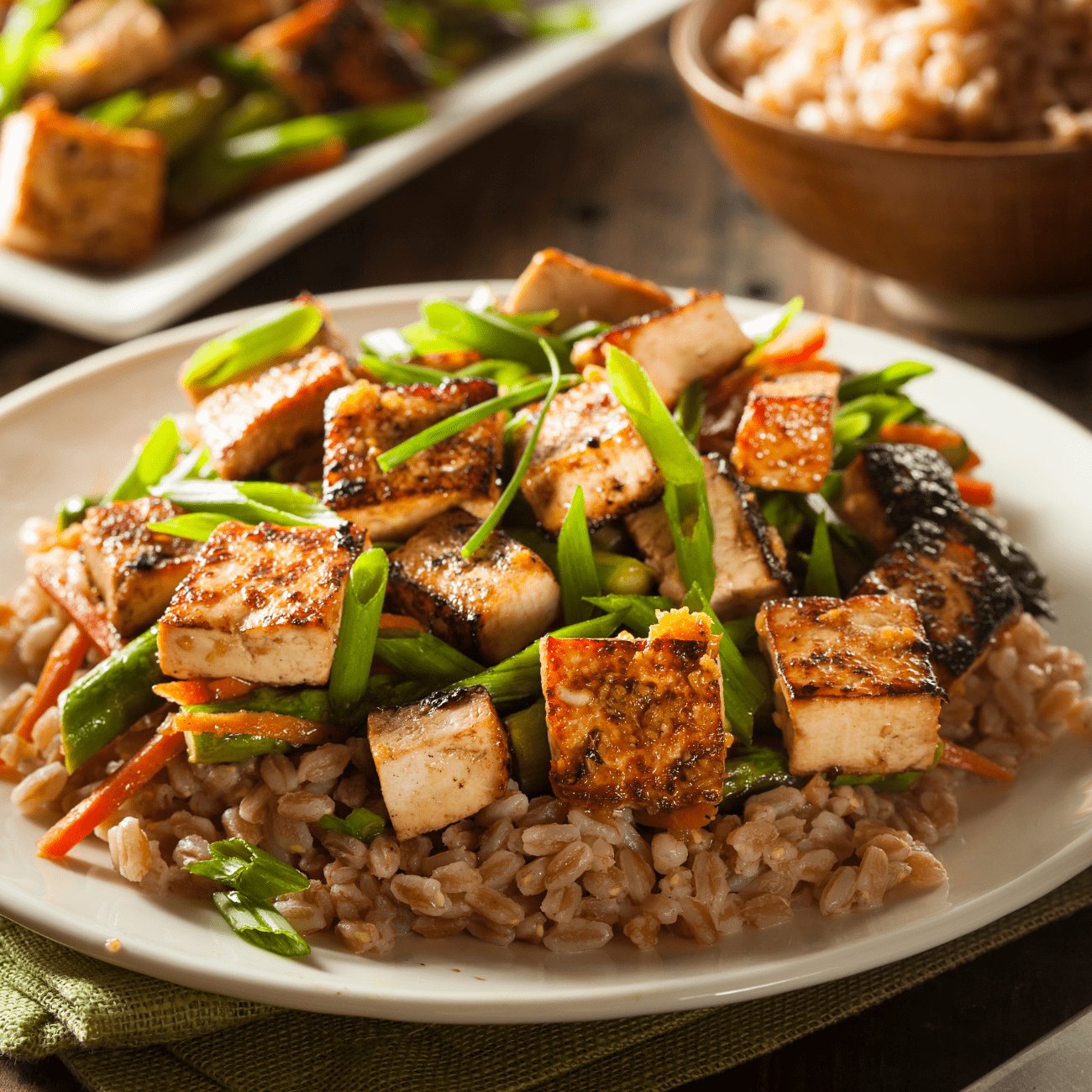
Lunch: Brown rice bowl with pan-seared tofu, green beans, shredded carrot, and a lemon tahini drizzle.
Dinner: Lentil and vegetable curry over quinoa with a side of steamed greens.
Snacks: Apple with peanut butter, a handful of walnuts, and a glass of water with lemon.
This day covers protein, fiber, iron, and healthy fats in a balanced way. If you want more variety, our quick easy vegan recipes to refresh your meal plan swap in cleanly without breaking the shopping list.
A Healthy Vegan Meal Plan for Beginners.
A healthy vegan meal plan for beginners should start simple. Pick five meals you already like, make them plant-based, and repeat them until cooking feels automatic.
Beginners fail for one reason: they try to cook a new recipe every night. That burns people out fast.
Start with these building blocks:
- One grain: rice, quinoa, or pasta.
- One protein: lentils, chickpeas, tofu, or tempeh.
- One vegetable you actually enjoy.
- One sauce that makes it taste good.
That formula makes hundreds of meals. Master it before you chase complex recipes.
A beginner week should also include a simple nutrient check.
Transitioning Without Overwhelm.
Transitioning works best in steps, not a single leap. Many people start with meat-free breakfasts and lunches, then move to dinners over a few weeks.
A workable sequence looks like this:
- Week 1: Swap breakfast only. Overnight oats, tofu scramble, or a fortified smoothie.
- Week 2: Add lunch. Grain bowls and leftovers from dinner make this easy.
- Week 3: Swap three dinners. Keep two familiar meals in the rotation so the week does not feel like a test.
- Week 4: Swap all dinners and review what worked. Keep the five meals that stuck.
Keep comfort food in the mix. A vegan diet fails when it feels like punishment. Plant-based comfort food is a good way to keep the change enjoyable.
Watch out: cutting out all familiar foods at once is the fastest route to quitting.
For a deeper look at making the change stick, read our guide on sustainable plant based living tips that last. If you want a professional to check your plan, here is how to get expert vegan nutrition advice online.
Free Healthy Vegan Meal Plans: What You Get and What You Miss.
Free healthy vegan meal plans are a fine starting point. They give you a structure, a shopping list, and a sense of portion size.
Here is where free plans fall short:
- They rarely adapt to allergies or dietary restrictions.
- Portions assume a standard appetite and activity level.
- Most skip guidance on B12, iron, and calcium.
- Nobody answers your questions when a meal flops.
That last point matters most. A plan is static. A community is not.
Watch out: free plans that promise “all your nutrients in one week” usually ignore B12 entirely. Check any plan for that gap before you commit.
Vegan Meal Prep for the Week: Storage and Time-Saving Tips.
Vegan meal prep for the week saves time and money when you cook once and store smart. The goal is not seven identical containers.
Does it list every ingredient for every meal?
- Can you cook most meals in under 30 minutes?
- Does it cover B12, iron, and calcium?
- Can you swap meals for allergies or preferences?
- Is there a real person or community to ask questions?
Score each plan from 1 to 5 on those five lines. Anything under 15 is not worth your time.
| Plan Type | Time Per Week | Best For | Main Weakness |
|---|---|---|---|
| Free online plan | Low setup, high guesswork | Testing vegan eating | No support or B12 guidance |
| Cookbook plan | Medium | Confident home cooks | Static, no swaps |
| Community plan | Medium | Beginners and families | Requires engagement |
Best for: beginners who want structure and support. Skip if: you already have a rotation that works and just need new recipes.
The hardest part of vegan eating is not the food. It is building a plan you can repeat when life gets busy.
Frequently Asked Questions
What should a healthy vegan meal plan include?
A healthy vegan meal plan should center on whole foods: legumes, tofu, tempeh, whole grains, leafy greens, and seasonal produce. Include sources of healthy fats like nuts and seeds, and add nutritional yeast for B12. Balance each day with complex carbohydrates, plant protein, and fiber-rich vegetables. A good plan also accounts for vitamin B12 and iron absorption, and leaves room for snack options and hydration.
Can a vegan meal plan provide enough protein?
Yes. Plant protein from legumes, tofu, tempeh, whole grains, and nuts can meet daily needs when portions are consistent. A healthy vegan meal plan for beginners should show realistic serving sizes and combine protein sources at meals. If you track macronutrients for fitness, a plan with clear protein totals per meal makes it easier to hit your target without relying on supplements.
How do I plan vegan meals for a busy week?
Use vegan meal prep for the week: batch cooking grains and legumes on one day, chopping vegetables, and storing components separately. A 7-day vegan meal plan with grocery list removes daily decisions. For time-constrained cooking, choose recipes with short active times and plan leftovers for lunch. Post-meal prep storage in airtight containers keeps food fresh and makes assembling meals quick.
Are free healthy vegan meal plans enough for beginners?
Free healthy vegan meal plans can be a useful starting point, but they vary in nutritional detail and grocery guidance. Beginners often need structure: a shopping list, portion guidance, and notes on B12 and iron. A free plan may not cover dietary restrictions or macro-tracking. Compare what each plan includes, and use a free plan to test the format before committing to a more complete resource.
What groceries do I need for a week of vegan meals?
Stock pantry staples like canned legumes, whole grains, nutritional yeast, and healthy fats. Buy fresh produce based on your daily menu: leafy greens, seasonal vegetables, and fruit for snacks. Include tofu or tempeh for protein, and calcium-set tofu if you want a firm texture. A grocery list tied to your 7-day plan prevents waste and keeps budget-friendly shopping on track.
